|
|
|
| |
|
Facial recognition Technology
|
|
Facial biometric matching is used to
verify the identity of individuals attempting access for various
border management and access control applications. Facial matching
algorithms make use of digital photographs of the face stored in a
database or on an ID card. These digital images are captured upon
registration into the system, and then compared to a live photo of
the individual upon an access attempt in a process called
“matching”. The performance of the matching algorithm can be
improved—that is, the occurrence of false matches and false accepts
can be reduced—if the quality of the facial images can be maximized.
For this reason, new standards for biometric facial images specify
normative requirements for facial image quality, and also provide
best practices for biometric facial image capture. |
|
|
:: How is
facial recognition technology currently being used? |
|
Unlike other biometric systems,
facial recognition can be used for general surveillance, usually
in combination with public video cameras. There have been three
such uses of face-recognition in the U.S. so far. The first is
in airports, where they have been proposed - and in a few cases
adopted - in the wake of the terrorist attacks of September 11.
Airports that have announced adoption of the technology include
Logan Airport in Boston, T.F. Green Airport in Providence, R.I.,
and San Francisco International Airport and the Fresno Airport
in California.
A second use of the technology was at the 2001 Super Bowl in
Tampa, where pictures were taken of every attendee as they
entered the stadium through the turnstiles and compared against
a database of some undisclosed kind. The authorities would not
say who was in that database, but the software did flag 19
individuals. The police indicated that some of those were false
alarms, and no one flagged by the system was anything more than
a petty criminal such as a ticket scalper. Press reports
indicate that NewOrleans authorities are considering using it
again at the 2002 Super Bowl.
The technology has also been deployed by a part of Tampa, Ybor
City, which has trained cameras on busy public sidewalks in the
hopes of spotting criminals. As with the Super Bowl, it is
unclear what criteria were used for including photos in the
database. The operators have not yet caught any criminals. In
addition, in England, where public, police-operated video
cameras are widespread, the town of Newham has also experimented
with the technology. |
|
|
:: Facial
Recognition: How it Works |
|
|
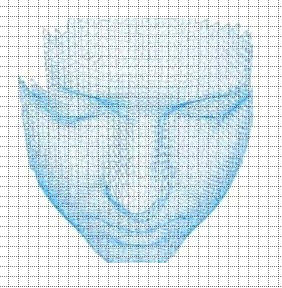
Facial recognition utilizes
distinctive features of the face - including the upper outlines
of the eye sockets, the areas surrounding the cheekbones, the
sides of the mouth, and the location of the nose and eyes - to
perform verification and identification. Most technologies are
somewhat resistant to moderate changes in hairstyle, as they do
not utilize areas of the face located near the hairline. When
used in identification mode, facial recognition technology
generally returns candidate lists of close matches as opposed to
returning a single definitive match (as do fingerprint and
iris-scan technologies).
Image Quality
The performance of facial recognition technology is very closely
tied to the quality of the facial image. Low-quality images are
much more likely to result in enrollment and matching errors
than high-quality images. For example, many photograph databases
associated with drivers' licenses or passports contain
photographs of marginal quality, such that importing these files
and executing matches may lead to reduced accuracy. Similarly
well-known problems exist with surveillance deployments. If
facial images for enrollment and matching can be acquired from
live subjects with high-quality equipment, system performance
increases substantially. For facial recognition at slightly
greater-than-normal distances, there is a strong correlation
between camera quality and system capabilities.
Facial Scan Process Flow
As with all biometrics, 4 steps - sample capture, feature
extraction, template comparison, and matching - define the
process flow of facial scan technology. Enrollment generally
consists of a 20-30 second enrollment process whereby several
pictures are taken of one's face. Ideally, the series of
pictures will incorporate slightly different angles and facial
expressions, to allow for more accurate matching. After
enrollment, distinctive features are extracted (or global
reference images are generated), resulting in the creation of a
template. The template is much smaller than the image from which
it is derived: facial images can require 15-30kb, templates
range from 84 bytes to 3000 bytes. The smaller templates are
normally used for 1:N matching.
Verification and identification follow the same steps. Assuming
your audience is a cooperative audience (as opposed to
uncooperative or non-cooperative), the user 'claims' an identity
through a login name or a token, stands or sits in front of the
camera for a few seconds, and is either matched or not matched.
This comparison is based on the similarity of the newly created
match template against the reference template or templates on
file. The point at which two templates are similar enough to
match, known as the threshold, can be adjusted for different
personnel, PC's, time of day, and other factors.
Verification vs. Identification
System design for facial scan verification vs. identification
differ in a number of ways. The primary difference is that
identification does not utilize a claimed identity. Instead of
employing a PIN or user name, then delivering confirmation or
denial of the claim, identification systems attempt to answer
the question "Who am I?" If there are only a handful of
enrollees in the database, this requirement is not demanding; as
databases grow very large, into the tens and hundreds of
thousands, this task becomes much more difficult. The system may
only be able to narrow the database to a number of likely
candidates. Human intervention may then be required at the final
verification stages.
A second variable in identification is the dynamic between the
target subjects and capture device. In verification, one assumes
a cooperative audience, one comprised of subjects who are
motivated to use the system correctly. Facial scan systems,
depending on the exact type of implementation, may also have to
be optimized for non-cooperative and uncooperative subjects.
Non-cooperative subjects are unaware that a biometric system is
in place, or do not care, and make no effort to either be
recognized or to avoid recognition. Uncooperative subjects
actively avoid recognition, and may use disguises or take
evasive measures. Facial scan technologies are much more capable
of identifying cooperative subjects, and are almost entirely
incapable of identifying uncooperative subjects.
Primary Facial Recognition Technologies
The four primary methods employed by facial recognition vendors
to identify and verify subjects include eigenfaces, feature
analysis, neural network, and automatic face processing. Some
types of facial scan technology are more suitable than others
for applications such as forensics, network access, and
surveillance.
"Eigenface," roughly translated as "one's own face," is a
technology patented at MIT which utilizes two dimensional,
global grayscale images representing distinctive characteristics
of a facial image. Variations of eigenface are frequently used
as the basis of other face recognition methods.
|
|
top
|
|
|
|
ttendance india access control india biometric india security india
Fingerprint india Precise Biometrics Biometric Biometrics Security
Biometrics Information Bio Biometrics india Biometric Fingerprint scanner
Time attendance Access control OEM modules security Time cards SDK USB
finger print sensor Authentication Identification Verification Biometrics
time attendance Biometrics access control Fingerprint time attendance
Fingerprint access control Proximity RFID smart cards Software Hardware free
low cost cheapest products Solutions project services development matching
recognition
top
|
|
more information
about biometrics visit following website
|
|
Biometrics Identity
Management |
|
 |
|
|
|
|
|
.: Related Products :. |
|
 |
|
FSM9000 |
|
 |
|
Hamster |
|
 |
|
FDA01 |
|
 |
|
|
|
/
|
|
 |
|
India, USA
(New York, California) Kuwait UK Qatar
Luxembourg Norway Brunei Kuwait Iceland
Finland Dubai UAE Oman Bahrain
Saudi Arabia Australia south Africa
Canada America middle east Europe Asia
Argentina Austria Azerbaijan Bahamas
Bangladesh Belgium Bhutan Brazil Brunei
Bulgaria Burma Cameroon Canada Chile
China Colombia. Congo Costa Rica Croatia
Cuba Cyprus Czech Republic Denmark East
west north south Ecuador Egypt
England c Laos Malaysia Maldives Islands
Mauritius Mexico Myanmar Nepal The
Netherlands New Zealand Nigeria Ireland
Norway Oman Pakistan Philippines Poland
Portugal Qatar Romania Russia Saudi
Arabia Scotland Seychelles
Sierra Singapore South Africa Spain Sri
Lanka Sudan Sweden Switzerland Syria
Taiwan Tanzania Thailand Trinidad
Tunisia Turkey United Arab Emirates
United Kingdom Britain United States of
America Vatican Venezuela Vietnam
Wales Zimbabwe Greece Slovenia Bahamas
The Czech Republic Malta Barbados
Lithuania Latvia Seychelles Botswana
Equatorial Guinea Libya Saint Kitts and
Nevis Uruguay Lebanon Mauritius Belarus
Kazakhstan Grenada Iran Saint
Lucia Panama Serbia Dominica Saint
Vincent and the Grenadines Macedonia
Republic of Dominican Republic Peru
Suriname Belize Jamaica Azerbaijan
Belize
|
|
Biometrics India Ahmedabad,
Agra, Allahabad, Amritsar, Aurangabad,
Bangalore, Baroda, Bhopal, Bhubaneshwar,
Bikaner, Calicut, Chennai (Madras),
Chandigarh, Coimbatore, Dehradun,
Faridabad, Gandhinagar,
investments
Gwalior, Guwahati, Hyderabad, Indore,
Property
Jaipur, Jalandhar, Jammu, Kanpur,
Kholapur, Kochi (Cochin), Kolkata
(Calcutta), Lucknow, Ludhiana, Mumbai
(Bombay), Mysore, Nagpur, Nashik, New
Delhi, Patna, Pondicherry, Pune,
impact components
Raipur, Rajkot, Ranchi, Sangli, Sholapur,
Shimla, Srinagar, Surat, Thane, Trichi,
Thiruvananthapuram (Trivandrum), Udaipur,
Vadodara, Varanasi, Vijayawada,
Vishakhapatnam, Goa Andhra Pradesh,
Assam, Bihar, Goa, Gujarat, Karnataka,
Madhya Pradesh, Maharashtra,
biometric security Fingerprint
products India Orissa,
Punjab, Rajasthan, Tamil Nadu, West
Bengal,
biometric fingerprint scanner
Chandigarh, Delhi
ayurvedic
Development,
USB, Optical, cards, Sensors, Software
Biometrics Andhra Pradesh, Assam, Bihar, Goa, Gujarat, Karnataka, Biometric
Madhya Pradesh,
Biometrics time
attendance Maharashtra,
Orissa, Punjab,
biometric time attendance Fingerprint Rajasthan,
Biometric Tamil Nadu, West Bengal,
Biometric Chandigarh, Delhi India |
|
|
|
|
|
|
|
|
|
Home |
Services
| Products
| Solutions
| Support
|
Partners
|
Careers
| Contact
Us |
|
|
|
|
|
|
|