| |
|
Biometrics Information
|
|
|
|
|
:: Why Biometrics? |
|
Biometrics authenticates and
determines an individual’s identity by utilizing the uniqueness
of his or her biological and behavioral characteristics. Other
authentication methods often used are PIN method and Token (ID
Card) method. Biometrics is superior to PIN or Token methods in
the following ways:
|
1) Increased Security
Biometrics offers superior security than PIN or ID Card.
Biometric methods do not involve danger of information exposure
like PIN and ID Card do and unauthorized persons cannot attempt
to steal or make a guess at private information. |
2) Increased Convenience
Today, people have to remember many passwords. They should be
able to provide their passwords whenever they use their credit
cards or log into various sites on the Internet. Uniform
passwords can lead to serious dangers if exposed. However,
biometrics does not require us to remember our passwords. |
|
|
:: Classification
of Biometrics |
|
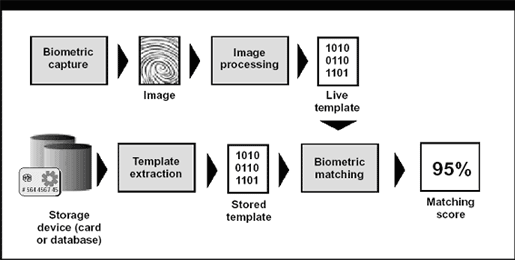
Biometrics can be classified
according to the type of biometric data used, e.g., face, iris,
voice, signature, or hand geometry identification. However, all
these methods take the same authentication process. The
biometric authentication process is as described below:
|
|
|
|
Among all available biometric
technologies, fingerprint identification is the most popular
one. This is due to the fact that fingerprint identification is
far more efficient than others, especially considering how
economical it is. |
|
top |
|
|
::
Issues |
|
1) Standardization
Active efforts are being made to standardize various core
biometric technologies mainly available in the U.S. and Europe.
Major standardization methods for biometric identifications are
as follows: |
a) BAPI This
standard was developed by I/O Software in 1998.
Being O/S, computer platform, and sensor device
independent, it was designed to support the
development of applications. Some of the features
include the unification of encryption method,
standardized programming environment, and support
for the client-server applications. |
|
b) HA-API
This method was first introduced in December 1997 at
the 10th U.S. Biometric Consortium held by National
Registry Inc. a company sponsored by the U.S.
Ministry of National Defense. Thinking that
biometrics would be useful in computer security, the
U.S. Ministry of National Defense supported the
development. However, they failed to secure
companies to work on the project. |
|
c) BioAPI
Compaq was the first company to form BioAPI
Consortium, which consisted of 6 companies with a
goal to standardize industrial biometric
identification API in April 1998. In December of the
same year, and in March the following year, BAPI and
HA-API were included in new BioAPI. BioAPI
Consortium was constituted by various groups,
including 78 companies who are biometric
identification developers and medical/financial/
governmental users. BioAPI has recently been adopted
as ANSI/INCITS 358, American standard. | | |
2) Multimodal Biometrics
There has been heated researches made to have multimodal
biometrics be a method that overcomes the limitations of
unimodal biometric technologies. Multimodal biometrics is
recommended as a way to improve user authentication through
biometrics of greater reliability.
|
a) Multiple Sensors
A single biometric feature can be extracted through
different sensors. For instance, we can use optics-,
ultrasound-, and semiconductor-based sensors. |
|
b) Multiple
Biometrics A number of biometric features can
be captured simultaneously for authentication. For
example, facial and fingerprint identification can
be used at the same time. However, this method is
not recommended due to its high cost. |
|
c) Multiple Units
of the Same Biometric Various units can be
used for one biometric feature. Multiple units can
often be provided by natural human physical
structure such as through the user’s two irises and
ten fingerprints. A disadvantage to this method is
that it can make a user uncomfortable when capturing
his or her biometric feature samples. The process
can also take a long time. |
|
d) Multiple
Instances This means that pieces of biometric
information of one feature are taken at different
instances by one sensor. One example of this method
is to capture a fingerprint a number of times with a
sensor or to sample a voice or a face multiple times
for later use. |
e) Multiple
Representation and Matching Algorithms for the Same
Biometric Input Signal
Multimodal biometrics requires more time
to work with the information and develop an
appropriate system than a unimodal biometrics does
since several modules are put in use. For that
reason, if a unimodal method can assure the users of
high enough dependability in a given circumstance,
it may not be necessary to employ a multimodal
biometric method. If the greatest degree of
reliability is required, however, it may become
necessary to adopt a multimodal biometric method in
order to ensure any possible advancement. | | |
|
top
Biometrics Information Fingerprint Information Time Attendance
Information Biometric security
services
Information Biometric technology
Biometric companies
Information Biometric research
Information Biometric books
biometric tutorials biometric biometric access biometric
contact pune services Precise Time attendance Access
control OEM modules
Information Authentication
Identification Verification
Information Proximity
Information RFID
Information smart cards
Information Software Hardware
free low cost cheapest products Solutions project services
development matching recognition. |
|
more information
about biometrics visit following website
|
| |
|
 |
|
|
|
|
|
|
|
.: Related Products :. |
|
|
|
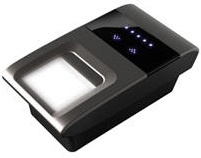
FSM9000 |
|
 |
|
 |
|
|
|
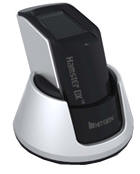
Hamster |
|
 |
 |
|
|
|
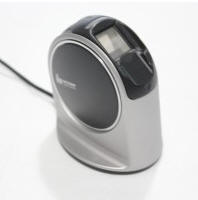
FDA01 |
|
 |
 |
|
FIM01 |
|
 |
 |
|
|
|
|
|
|
|
|
|
|
|
|
|
|
|
|
Home |
Services
| Products
| Solutions
| Support
|
Partners
|
Careers
| Contact
Us |
|
|
|
|